
More Cotumacci Lessons and Preparing for In-Person Activities


NICK’S BLOG:
Lesson 6, January 2025
Elinor had composed a piece (melody and bass) based on a melodic thread, drawn from her work on Cotumacci’s solfeggi. It works well and is an impressive achievement, especially compared with what she could accomplish before solfeggio training! She said that in the past she would rely on instinct as to what sounded ‘right.’ We went through the composition in terms of syntax (harmony, phrasing, schemas, Condotta), rhythm (syllable versus note speed, balance, euritmia, contrast, fluency), and meaning (gesture, topic, song, speech, dance, overall discourse of tight/loose, tension/release, resolution).
Lesson, 8 January 2025
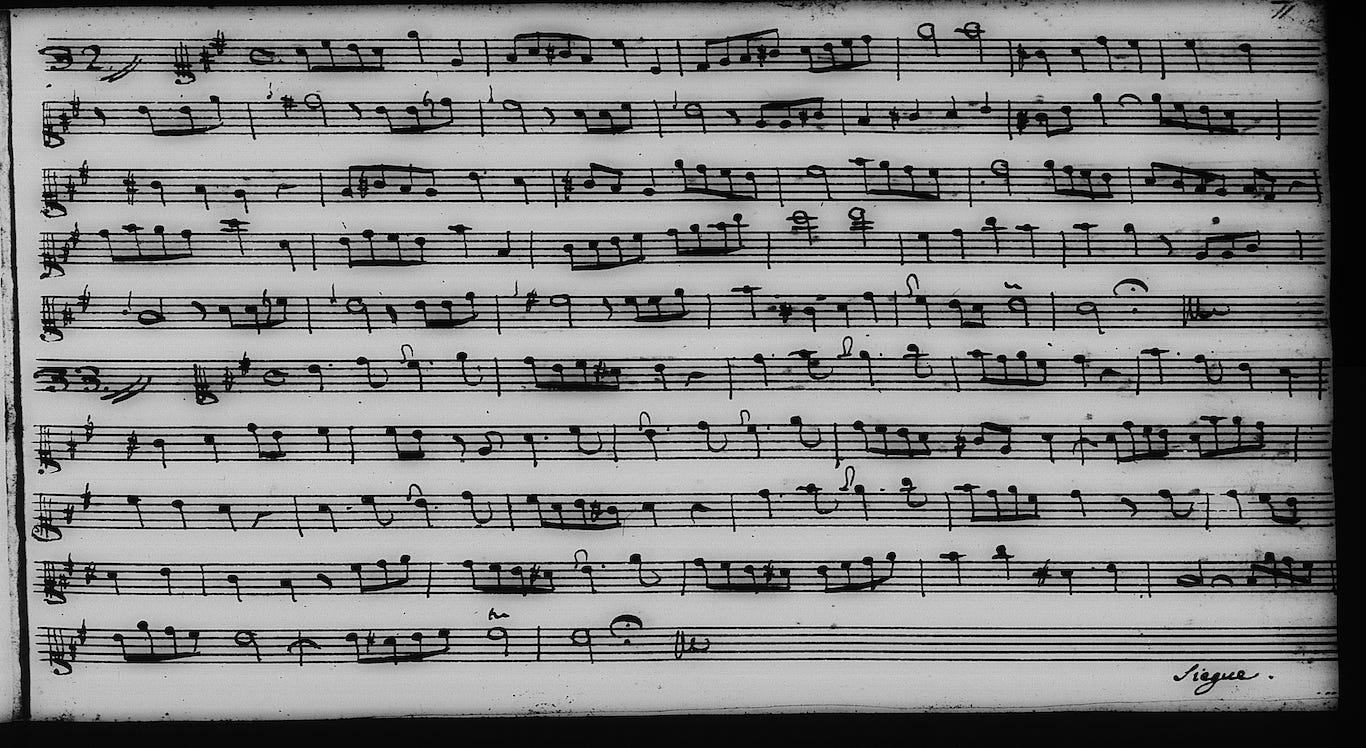
Cotumacci 38 and 39. Elinor’s solmizations are mostly spot-on and her basses require only a few stylistic tweaks. We looked at cues in the melody for imitations in the bass.
Nikhil Hogan Show 13 January 2025
We presented our project for Nikhil’s specialist audience of early music fans.
Elinor has been practising composition using syllabic threads and formulas drawn from the Cotumacci collection. We have also been working on going through all the Cotumacci solfeggi.
ELINOR’S BLOG:
Although I’m making fewer mistakes, I still feel like I don’t fully understand why I make the mistakes that I do, and also how to avoid them in the future. Each syllable has so many possible contexts and meanings, there aren’t simple formulaic solutions to attach to a melody. Even though some Schemas are quick to learn, for example that I can write ^7-^1, ^7-^1 in the bass for a Fonte or a Monte or ^4-^3-^2-^1 for Prinner, etc., common schemas do not account for so many parts of a melody. The transitions and the many possible basses have to be internalized and heard and learned. Thankfully singing the solfeggio and playing my bass on my cello usually helps me make corrections and find solutions, but I’d love to be able to write a bass and hear it more in my head without so much needing the cello.
Nikhil Hogan Show
It was an honour for me to be on Nikhil’s show because I have listened to it many times and I really like that he is bringing quality info about Partimento, historical improvisation, and solfeggio into a world-wide community.
I hope that my participation in the show can also encourage other instrumentalists who aren’t pianists or who aren’t so versed in theory to take up learning more about solfeggio. No matter how far a musician goes, any time spent on this fascinating and insightful topic will enhance their music making.
 | A guest post by
|